When choosing underfloor heating for your home, the biggest decision you’ll face is whether to install an electric or water-based system. Both have their advantages and are suited to different situations. This guide will help you make an informed choice.
Electric Underfloor Heating
Electric underfloor heating systems use heating cables or mats installed beneath your floor covering to provide warmth.
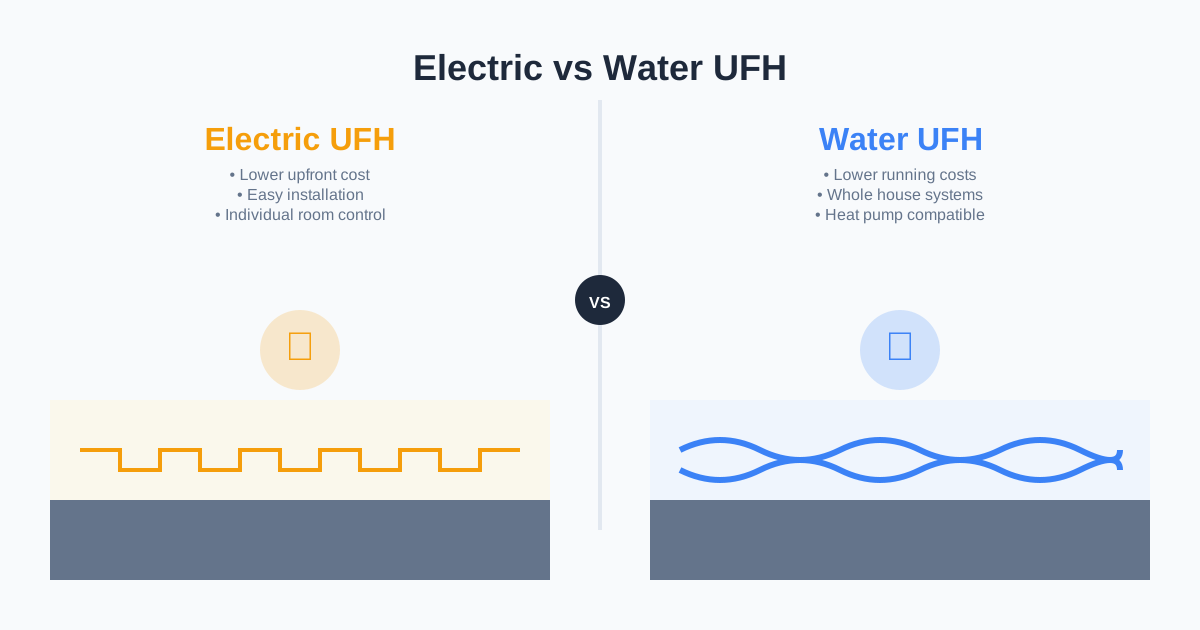
Advantages of Electric UFH
- Lower upfront costs - No need for boiler modifications or manifolds
- Easier installation - Particularly good for renovations and smaller areas
- Individual room control - Each room can have its own thermostat
- Thinner floor build-up - Adds minimal height to your floors
- Faster response time - Heats up more quickly than water systems
Disadvantages of Electric UFH
- Higher running costs - Electricity is more expensive than gas per kWh
- Best for smaller areas - Running costs become prohibitive for whole-house heating
- Limited flooring options - Heat output can be reduced with thick carpets or underlay
Water Underfloor Heating
Water underfloor heating systems circulate warm water through pipes installed in your floor screed or beneath floorboards.
Advantages of Water UFH
- Lower running costs - Uses your existing boiler or heat pump efficiently
- Whole-house heating - Cost-effective for heating entire properties
- Works with renewable energy - Compatible with heat pumps and solar thermal
- Even heat distribution - Provides consistent warmth across large areas
- Increases property value - Seen as a premium feature by buyers
Disadvantages of Water UFH
- Higher installation costs - Requires manifolds, pumps, and potentially boiler upgrades
- Complex installation - Best installed during construction or major renovations
- Slower response time - Takes longer to heat up than electric systems
- Higher floor build-up - Requires more floor height for pipes and screed
Which System Should You Choose?
Choose Electric UFH if:
- You’re heating small areas (bathrooms, kitchens, conservatories)
- You’re retrofitting and don’t want major disruption
- You want individual room control
- You have limited floor height available
- You’re on a tight installation budget
Choose Water UFH if:
- You’re heating a whole house or large areas
- You’re building new or doing major renovations
- You have or plan to install a heat pump
- You want the lowest possible running costs
- You’re concerned about long-term energy efficiency
Installation Costs Comparison
Electric UFH:
- Materials: £15-£30 per m²
- Installation: £10-£20 per m² (DIY possible)
- Total: £25-£50 per m²
Water UFH:
- Materials: £20-£40 per m²
- Installation: £30-£60 per m² (professional required)
- Additional costs: Manifold, pumps, controls (£500-£2000)
- Total: £50-£100 per m²
Running Costs Comparison
For a typical living room (20m²):
- Electric UFH: £200-£400 per year
- Water UFH: £80-£150 per year
Costs based on average UK energy prices and usage patterns.
Making Your Decision
The choice between electric and water underfloor heating depends on your specific situation:
- Room size and usage - Electric for bathrooms and small rooms, water for living areas and whole-house heating
- Installation timing - Electric for retrofits, water for new builds
- Budget considerations - Electric for lower upfront costs, water for lower running costs
- Existing heating system - Water systems work best with modern boilers or heat pumps
Next Steps
Before making your final decision:
- Get quotes from qualified installers for both systems
- Calculate long-term running costs based on your energy tariff
- Consider your floor construction and available height
- Think about your future heating plans and home improvements
Both systems can provide comfortable, efficient heating when properly designed and installed. The key is choosing the right system for your specific needs and circumstances.